Cloud Computing for Businesses: Why Companies Are Moving to the Cloud in 2026
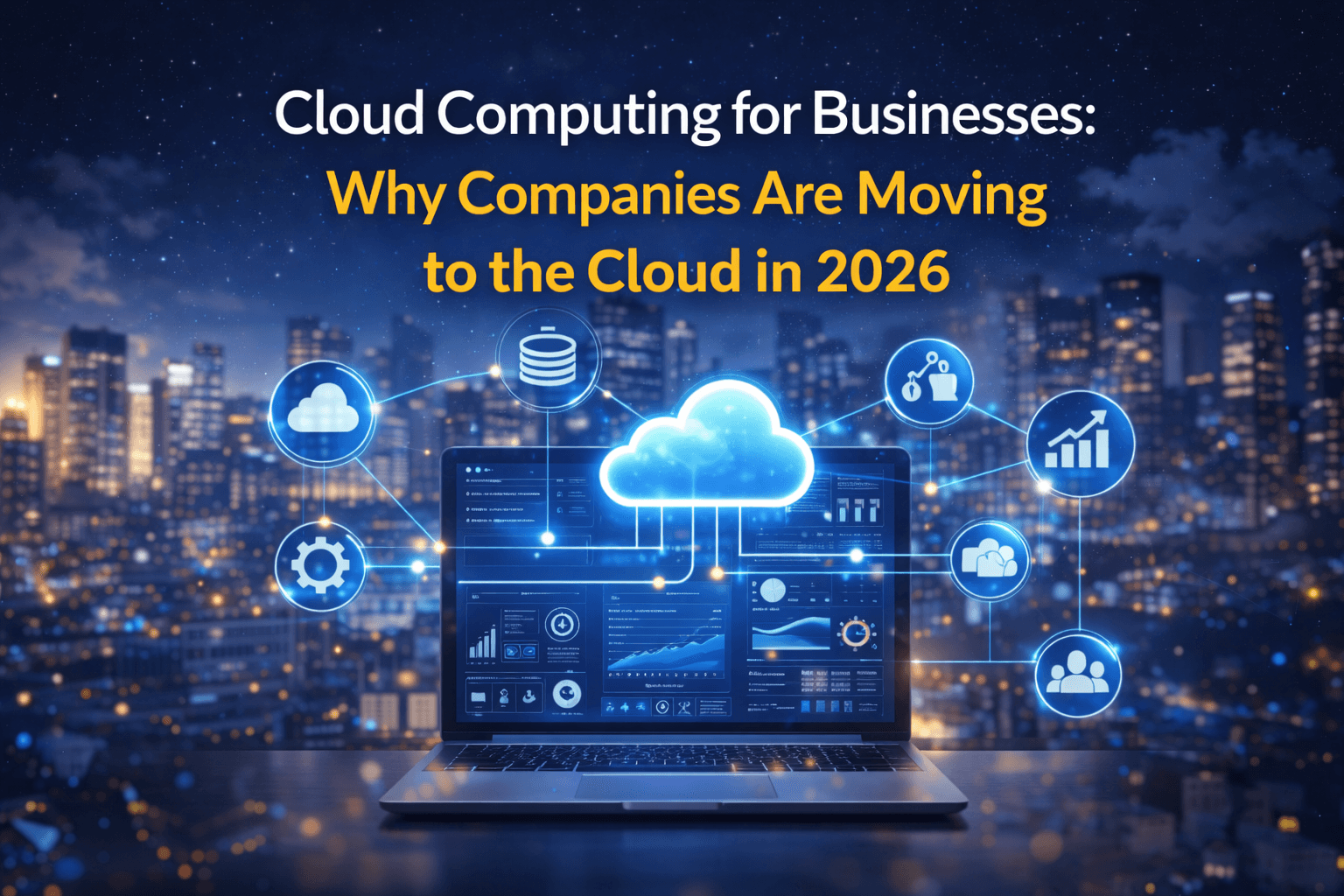
Cloud computing is transforming how modern businesses operate. Discover why companies are moving to the cloud, the benefits of cloud technology, and how businesses can scale faster using cloud platforms.
Cloud Computing for Businesses: Why Companies Are Moving to the Cloud in 2026?
Cloud computing has become one of the most important technologies powering modern businesses. In 2026, organizations are increasingly moving their systems, applications, and data to the cloud to improve scalability, security, and operational efficiency.
Traditional IT infrastructure requires expensive hardware, constant maintenance, and complex upgrades. Cloud technology eliminates many of these challenges by allowing companies to access computing resources through the internet.
Businesses that adopt cloud solutions gain the flexibility needed to innovate faster and respond quickly to market demands.
• What Is Cloud Computing
Cloud computing refers to delivering computing services such as servers, storage, databases, networking, and software over the internet.
Instead of maintaining local servers, businesses can access powerful infrastructure from cloud providers. This allows organizations to scale resources as needed and reduce operational complexity.
Common cloud services include:
Cloud storage systems
Cloud hosting platforms
Data processing services
Software-as-a-Service applications
Cloud-based development environments
• Benefits of Cloud Computing for Businesses
Cloud technology offers several advantages that make it attractive for modern companies.
Scalability
Businesses can easily scale their infrastructure based on demand without purchasing additional hardware.
Cost Efficiency
Cloud platforms reduce infrastructure costs because companies only pay for the resources they use.
Remote Accessibility
Employees can access systems and data from anywhere, improving collaboration and productivity.
Improved Security
Modern cloud providers implement advanced security measures such as encryption, monitoring, and automated backups.
• The Future of Cloud Technology
Cloud computing will continue to grow as more businesses adopt digital solutions. Technologies such as artificial intelligence, big data analytics, and Internet of Things systems rely heavily on cloud infrastructure.
Companies that invest in cloud platforms today will have the flexibility needed to adapt to future technological changes. Cloud technology allows businesses to scale resources instantly, manage large volumes of data, and deliver digital services to customers across the world.
In the coming years, cloud computing will play a major role in supporting advanced technologies such as machine learning, automation systems, and real-time data processing. Businesses will increasingly rely on cloud platforms to build scalable applications, run complex workloads, and maintain secure digital environments.
Another important trend is the growth of hybrid and multi-cloud environments. Many organizations are now using multiple cloud providers or combining cloud infrastructure with on-premise systems to achieve better flexibility, reliability, and performance.
As digital transformation accelerates, cloud computing will become the backbone of modern business operations. Organizations that adopt cloud technologies early will be able to innovate faster, reduce operational costs, and respond quickly to changing market demands.
The future of cloud technology is not just about storage or hosting—it is about enabling smarter, faster, and more connected digital ecosystems for businesses around the world..
Share this article
Help others discover this content
Admin
suhail@softever.tech